

How to Tell If Coffee Is Fresh: 7 Tests That Work
Table of Contents
- Why Coffee Freshness Matters for Flavor
- The Coffee Bloom Test: Your Fastest Freshness Check
- Signs of Stale Coffee You Can Spot in Seconds
- Understanding Coffee Shelf Life: Roast Dates and Packaging
- How to Store Coffee Beans to Keep Them Fresh
- Freshness Tests for Espresso vs. Pour-Over
- What to Do With Stale Coffee (Don't Toss It Yet)
- Frequently Asked Questions
Last Updated: September 24, 2026
Why Coffee Freshness Matters for Flavor
Fresh coffee tastes sweet, bright, and alive. Stale coffee tastes flat, papery, and dull. The difference comes down to two things: carbon dioxide leaving the bean and oxygen getting in.
Coffee is a perishable product, not a pantry staple. And learning how to tell if coffee is fresh is the single fastest way to improve your morning cup.
What Happens During Degassing
Degassing is the release of carbon dioxide trapped inside coffee beans after roasting. Beans hold gas from the roast, then shed it over days and weeks.
That gas does real work. It pushes oxygen away from the bean and helps flavors stay intact. Once degassing slows, oxygen moves in and starts breaking down the oils that carry sweetness and aroma.
How Bean Density and Processing Affect Freshness Perception
Denser beans hold onto their character longer. A washed, high-grown bean often tastes vibrant weeks after roasting. A natural-process bean can taste muted sooner, even when it's technically fresher.
This is why two bags with the same roast date can age differently. Processing method and bean density change how fast a coffee seems to fade.
The Coffee Bloom Test: Your Fastest Freshness Check
The bloom test is the quickest way to check freshness at home. Pour a little hot water over your grounds and watch what happens.
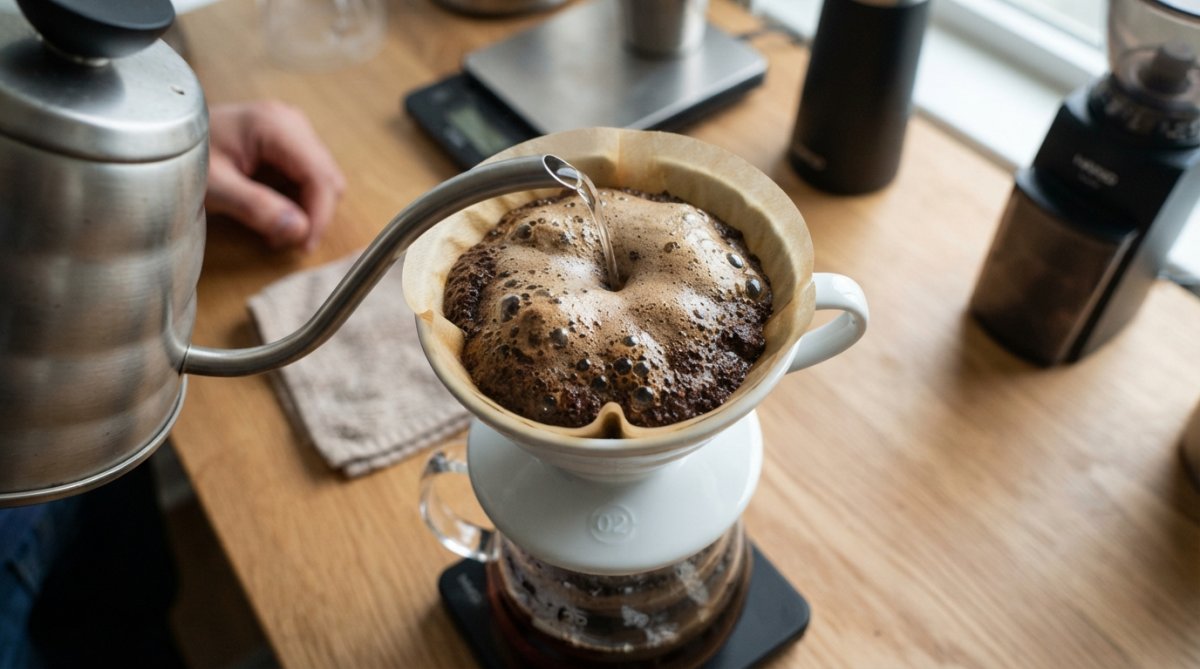
Fresh grounds swell and bubble. That foaming action is carbon dioxide escaping. A big, lively bloom points to a recent roast.
Here's how to run it:
- Add 2 tablespoons of ground coffee to a mug or dripper.
- Pour about 2 ounces of hot water over the grounds.
- Wait 30 seconds and watch the surface.
- Note how much the bed rises and bubbles.
- Compare against a bag you know is fresh.
Signs of Stale Coffee You Can Spot in Seconds
Stale coffee announces itself before you brew it. You just need to know what to look for.
Aroma, Oil, and Visual Cues
Oils tell a story too. A light sheen on dark-roasted beans is normal. But beans that look greasy and dull, with no shine at all, have often lost their edge.
A quick sensory evaluation pulls it together:
- Aroma: sweet and complex vs. papery and flat
- Surface: slight oil sheen vs. dry and lifeless
- Bloom: big and bubbly vs. weak and still
- Taste: vibrant and sweet vs. hollow and bitter
Understanding Coffee Shelf Life: Roast Dates and Packaging
Coffee shelf life depends on the roast date, not the expiration date. The roast date is the one number that matters most, because flavor degradation starts the day the beans leave the roaster, not the day they hit a shelf.
Why Roast Level Changes the Clock
Not every roast ages at the same speed, and this is where most advice falls short. A common pattern roasters observe:
- Light roasts are denser and retain more carbon dioxide, so they often taste flat and "rested" in the first few days but hold their character longer overall, frequently three to four weeks at peak.
- Dark roasts are more porous and degas faster, so they hit their stride sooner but fade sooner too, often peaking around one to two weeks.
- Medium roasts land in the middle, which is why they're the most forgiving for casual drinkers.
What Packaging Actually Does
Packaging is not decoration, it's active chemistry. The two features that matter most:
- The one-way valve. A degassing valve lets carbon dioxide escape the bag without letting oxygen in. Without it, a sealed bag of fresh beans would inflate and eventually burst, or the trapped gas would stale the coffee from the inside.
- The barrier layer. Foil-lined or metallized bags block oxygen, moisture, and light. A plain kraft paper bag with a tin tie does none of these well, it's essentially a slow leak.
| Format | Peak Freshness | Key Factor |
|---|---|---|
| Whole bean (light roast) | 3-4 weeks | Density, valve bag |
| Whole bean (dark roast) | 1-2 weeks | Porosity, faster degassing |
| Ground coffee | 1-2 weeks | Surface area exposed |
| Coffee pods | Weeks to months | Sealed packaging |
How to Store Coffee Beans to Keep Them Fresh
Good storage slows the clock. The goal is simple: block oxygen, moisture, heat, and light.
Follow these rules:
- Keep beans whole until you brew them
- Use an airtight container with a tight seal
- Store away from light and heat
- Avoid the fridge for daily use
- Freeze in small batches for long-term storage
- Buy only what you'll drink in a few weeks
Freshness Tests for Espresso vs. Pour-Over
Different brew methods show freshness in different ways, and espresso is the strictest judge of all. Most guides lump every brew method together, but the tests, and even the definition of "fresh," change depending on how you're brewing.
Espresso: The Rest Window Matters
Espresso has a narrow freshness sweet spot that most advice ignores. A bean can be too fresh for espresso and perfect for pour-over on the same day.
- Too fresh (0-3 days post-roast): The bean is still releasing carbon dioxide aggressively. That gas fights the water during extraction, producing gushers, fast, blond, under-extracted shots with thin, pale crema that dissipates in seconds.
- Peak window (roughly 5-14 days post-roast): Degassing has slowed enough for stable extraction. Shots pull thick and syrupy with a rich, persistent crema that lingers on the surface.
- Past peak (3+ weeks): Crema thins and darkens, flow speeds up, and the shot tastes hollow and ashy even if the grind is dialed in.
Pour-Over: The Bloom Tells the Story
Pour-over is more forgiving than espresso and rewards a different test. The bloom, the foaming swell when hot water hits the grounds, is your primary freshness signal here.
- A big, lively bloom that rises and bubbles for 20-30 seconds points to a recent roast with plenty of carbon dioxide still trapped.
- A weak, flat bloom suggests the gas is already gone.
- Taste confirms it: fresh pour-over tastes sweet and layered, while old pour-over tastes hollow and papery even if the bloom still looks acceptable.
Cold Brew: The Least Sensitive Method
Cold brew is the most forgiving of the three. Long steeping and low extraction temperature mask some staleness, but stale beans still taste muddy and flat. If you have beans that are borderline for espresso or pour-over, cold brew is a reasonable last stop before repurposing them.
Quick Reference by Method
- Espresso: watch crema and flow. Thin and pale means old; gushing means too fresh.
- Pour-over: watch the bloom and taste. Flat and papery means old.
- Cold brew: less sensitive, but stale beans still taste muddy.
A common mistake is judging espresso by bloom alone. The bloom test is a pour-over tool, espresso needs its own signals, and its own rest window, to be judged fairly.
What to Do With Stale Coffee (Don't Toss It Yet)
Stale coffee still has uses. Don't dump a whole bag just because it lost its spark.
Try these before you give up on it:
- Cold brew it. Long steeping hides some flatness.
- Use it in baking, rubs, or marinades.
- Add it to a compost pile or garden bed.
- Grind it fine for a body scrub.
- Blend it into a coffee smoothie with milk and cocoa.
Frequently Asked Questions
How long does coffee stay fresh after grinding?
Ground coffee loses its peak flavor within 15 to 30 minutes of grinding because the increased surface area speeds up oxidation. Whole beans stay fresh for two to four weeks after the roast date when stored properly, but ground coffee is best used within a week. For the freshest cup, grind right before brewing. If you buy pre-ground, choose bags with a one-way valve and a recent roast date.
What is the 15-15-15 coffee rule?
The 15-15-15 rule is a freshness guideline: use coffee within 15 months of harvest, 15 days of roasting, and 15 minutes of grinding for the best flavor. While 15 months post-harvest is a loose benchmark, the 15-day and 15-minute windows are practical targets. Green coffee holds up well for months, but roasted beans peak within two weeks, and ground coffee fades fast once exposed to air.
Is 2-year-old coffee still safe to drink?
Two-year-old coffee is generally safe to drink if it has been stored away from moisture and pests, but the flavor will be flat and papery. Oxidation and stale oils strip away sweetness and acidity, leaving a hollow, cardboard-like taste. If the beans smell rancid or show mold, discard them. For better results, use old coffee in recipes like rubs, compost, or cold brew experiments rather than drinking it straight.
How can you tell if ground coffee has gone rancid?
Rancid ground coffee smells like crayons, cardboard, or old cooking oil rather than the sweet, roasty aroma of fresh coffee. The color may look dull or grayish instead of rich brown, and the grounds can feel dry or clumpy. Brew a small test cup: if it tastes bitter, hollow, or sour with no sweetness, it has likely gone rancid. Store ground coffee in an airtight container away from light and heat to slow this process.
Freshness is the difference between a cup that wakes you up and one you drink out of habit. Check the roast date, run the bloom test, and store your beans right. When you want coffee that arrives fresh and tastes like it, get started with Jewel Mountain Coffee and brew a better cup tomorrow morning.