
Is Organic Coffee Better for Health? A 2026 Guide
Table of Contents
- What Is Organic Coffee and How Is It Certified?
- Pesticides in Coffee Beans: What Conventional Farming Leaves Behind
- Antioxidants in Coffee: Does Organic Beat Conventional?
- Mycotoxins and Mold: The Contaminant Most Coffee Guides Skip
- How to Choose High-Quality Coffee: A Practical Framework
- Roast Profile and Processing: Why They Matter More Than You Think
- Is Organic Coffee Worth the Price? Weighing Cost Against Health
- Frequently Asked Questions
Last Updated: September 25, 2026
What Is Organic Coffee and How Is It Certified?
Organic coffee is grown without synthetic pesticides, synthetic fertilizers, or GMOs, under a certified system that verifies those claims from farm to roaster. This guide breaks down what the certification guarantees, where it falls short, and how to tell genuinely high-quality organic coffee from a label that means very little.
Is organic coffee better for health? It depends what you're optimizing for. Organic beans reduce exposure to synthetic chemical residue and are grown under rules that protect soil and water. But certification says nothing about roast quality, freshness, or post-harvest handling, factors that shape your cup just as much.
USDA Organic Certification: What the Label Actually Means
USDA organic certification is a USDA program requiring farms to avoid synthetic pesticides and fertilizers, maintain buffer zones from conventional fields, and keep detailed records subject to annual inspection.
For coffee to carry the USDA Organic seal, the beans must be grown on land that has followed these standards for at least three years before harvest. Imported organic coffee must meet the same requirements and be certified by an accredited agent. You can read the full standards through the USDA National Organic Program.
What the label does not tell you: the variety of bean, the roast date, or whether the coffee was stored properly. A certified organic bean that sat in a warehouse for a year will taste worse than a fresh conventional one.
Pesticides in Coffee Beans: What Conventional Farming Leaves Behind
Conventional coffee farming relies on synthetic pesticides and fertilizers to manage pests and boost yield, and those chemicals can leave residue on the beans. Coffee grows in regions with high pest pressure, which is one reason conventional operations lean on chemical inputs.
The important nuance: most residue concern applies to the growing and processing stage, not your brewed cup. Roasting degrades many compounds, and brewing extracts only a fraction of what remains on the bean.
Which Chemicals Are Actually Used, and Who Sets the Limits
Pesticides most associated with conventional coffee include chlorpyrifos, endosulfan, glyphosate, and fungicides used against coffee leaf rust and berry disease. Several have been restricted or phased out in the U.S. over the past two decades, so the residue profile of imported conventional coffee depends heavily on the regulations of the country where it was grown, not U.S. rules alone.
In the United States, the Environmental Protection Agency sets tolerances, the legal maximum residue levels allowed on agricultural commodities sold in interstate commerce.
How Much Chemical Residue Ends Up in Your Cup?
Residue levels in brewed coffee are generally low for two mechanical reasons. Roasting subjects green beans to temperatures that break down many pesticide compounds, and water extracts only a fraction of what remains bound to the bean matrix, the same reason coffee doesn't extract all its caffeine in one pour.
A Practical Way to Think About the Trade-Off
If your concern is cumulative synthetic chemical exposure over years of daily drinking, organic is the cleaner choice and the premium is usually justified. If your concern is a single cup, the residue math is small either way. The decision is about what you're optimizing for, not whether conventional coffee is dangerous.
Antioxidants in Coffee: Does Organic Beat Conventional?
Coffee is one of the largest sources of polyphenols in many diets, and the antioxidant profile of a bean depends far more on roast level and freshness than on organic status. Research on organic versus conventional antioxidant content is mixed, with no clear winner.
Chlorogenic Acid, Roasting, and What Actually Survives the Drum
Chlorogenic acid is coffee's main antioxidant compound, associated with the drink's effects on oxidative stress and free radicals. Green beans are rich in it; roasting is where the number moves.
Coffee with Mushrooms Dark Roast →
Bioavailability: How Much of It Your Body Actually Uses
Bioavailability, how much of a compound your body actually absorbs, is the layer almost no coffee article addresses. Chlorogenic acid is poorly absorbed intact in the small intestine; a meaningful fraction reaches the colon, where gut bacteria metabolize it into smaller phenolic compounds that enter circulation. The antioxidant effect you experience is partly a function of your gut microbiome, not just the bean.
A few practical implications follow from this:
- Brew method matters. Paper filters trap some of the oils and larger compounds; metal filters and espresso pass more through. Neither is better for health across the board, but they deliver different compound profiles.
- Additions change absorption. Milk proteins can bind polyphenols and reduce their absorption; drinking coffee black delivers more of the compound intact.
- Timing matters. Antioxidant compounds continue to degrade in a brewed carafe as it sits on a warmer. Fresh-brewed delivers more than coffee held for hours.
- Individual variation is real. Microbiome differences mean two people drinking the same cup can absorb different amounts of the same compounds.
Where Organic Fits In
Organic farming can influence polyphenol content indirectly, plants under moderate stress often produce more defensive compounds, and organic systems sometimes yield smaller crops with higher concentrations per bean. But the effect is inconsistent across studies and easily swamped by roast and freshness. Buy organic for the pesticide and environmental reasons above, not for a measurable antioxidant upgrade.
Mycotoxins and Mold: The Contaminant Most Coffee Guides Skip
Mycotoxins are toxic compounds produced by certain molds that grow on coffee beans when drying, storage, or transport conditions go wrong, the contaminant most coffee guides ignore. Ochratoxin A is the one most studied in coffee.
How to Choose High-Quality Coffee: A Practical Framework
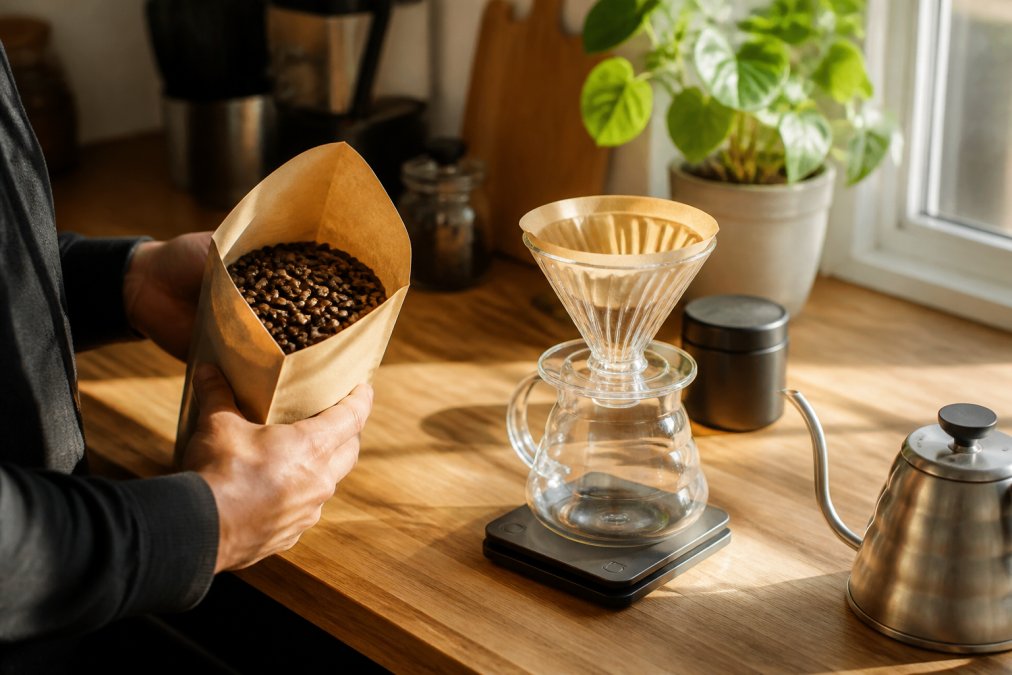
High-quality coffee comes down to four checkable factors: origin transparency, roast date, roast level, and processing method. You can evaluate almost any bag against these in under a minute.
- Does the bag name a specific origin or single-origin region?
- Is there a roast date printed, not just a "best by" date?
- Is the roast level stated (light, medium, dark)?
- Does it list the processing methods (washed, natural, honey)?
- Is there any fair trade or sourcing information?
Budget-Friendly Organic Sourcing Without Compromising Quality
You don't need to spend the most to drink well. A few approaches that work:
- Buy whole bean and grind at home; pre-ground coffee stales faster
- Choose medium roasts, which are forgiving across brewing methods
- Order directly from roasters who ship fresh rather than buying off a shelf
- Buy in the size you'll actually finish within a few weeks
Roast Profile and Processing: Why They Matter More Than You Think
The roast profile and processing methods shape flavor, aroma, and how much of the bean's original character survives to your cup, often mattering more than the organic label. A washed Ethiopian and a natural Brazilian can taste nothing alike even at the same roast level.
Is Organic Coffee Worth the Price? Weighing Cost Against Health
For most health-conscious drinkers, organic coffee is worth it if reducing synthetic chemical exposure matters and the price difference fits your budget. If your main goals are antioxidants and flavor, freshness and roast level move the needle more than certification.
Here's how to think about the trade-off:
| Priority | What Matters Most | Organic Necessary? |
|---|---|---|
| Reducing chemical exposure | Certified organic sourcing | Yes |
| Maximizing antioxidants | Light roast, fresh beans | No |
| Best flavor | Freshness, roast profile, origin | No |
| Avoiding mold risk | Traceable, well-stored beans | Helpful, not required |
| Budget | Fresh medium roast | No |
Frequently Asked Questions
Does organic coffee have more antioxidants than regular coffee?
Research on antioxidants in coffee shows that organic and conventional beans have similar polyphenol and chlorogenic acid levels. The roasting process, not the farming method, has the biggest impact on antioxidant content. Darker roasts generally contain fewer antioxidants than lighter roasts because heat breaks down chlorogenic acid. If antioxidants are your priority, choose a light or medium roast, whether organic or not.
Are there pesticide residues in conventional coffee?
Conventional coffee farming often uses synthetic pesticides and fertilizers. Trace amounts of chemical residue can remain on beans after harvesting and processing. The USDA sets tolerance limits for pesticide residues on imported coffee, but these limits vary by compound. Organic coffee avoids synthetic pesticides entirely, which reduces your overall toxic load over time, especially if you drink multiple cups daily.
What is the healthiest organic coffee to drink?
The healthiest organic coffee is freshly roasted and single-origin. Look for USDA organic certification on the label, a visible roast date, and transparency about processing methods. Medium roasts tend to preserve more chlorogenic acid than dark roasts. If you want added functional benefits, specialty blends that include ingredients like Lion's Mane or Reishi mushrooms offer a way to combine coffee with adaptogens.
How do I know if my coffee has mold or mycotoxins?
You cannot see or taste mycotoxins in coffee. Third-party lab testing is the only reliable way to confirm low levels. Some brands publish test results or state that their beans are screened for mold and mycotoxins. Choosing coffee from reputable sources with traceability from farm to roaster reduces your risk. Storing beans in a cool, dry place also prevents mold growth after purchase.